
McMaster orders special session so legislators can redraw voting lines

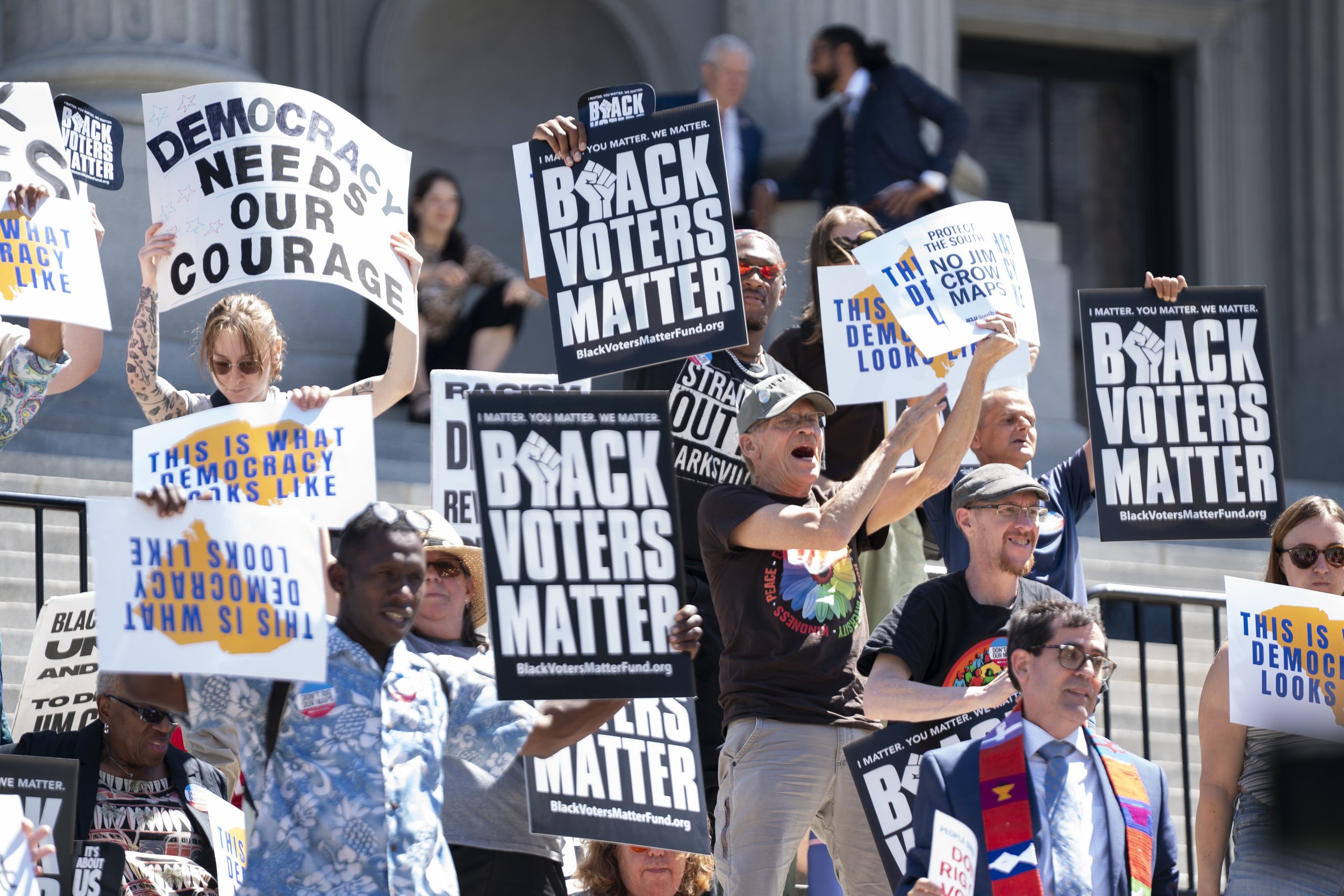
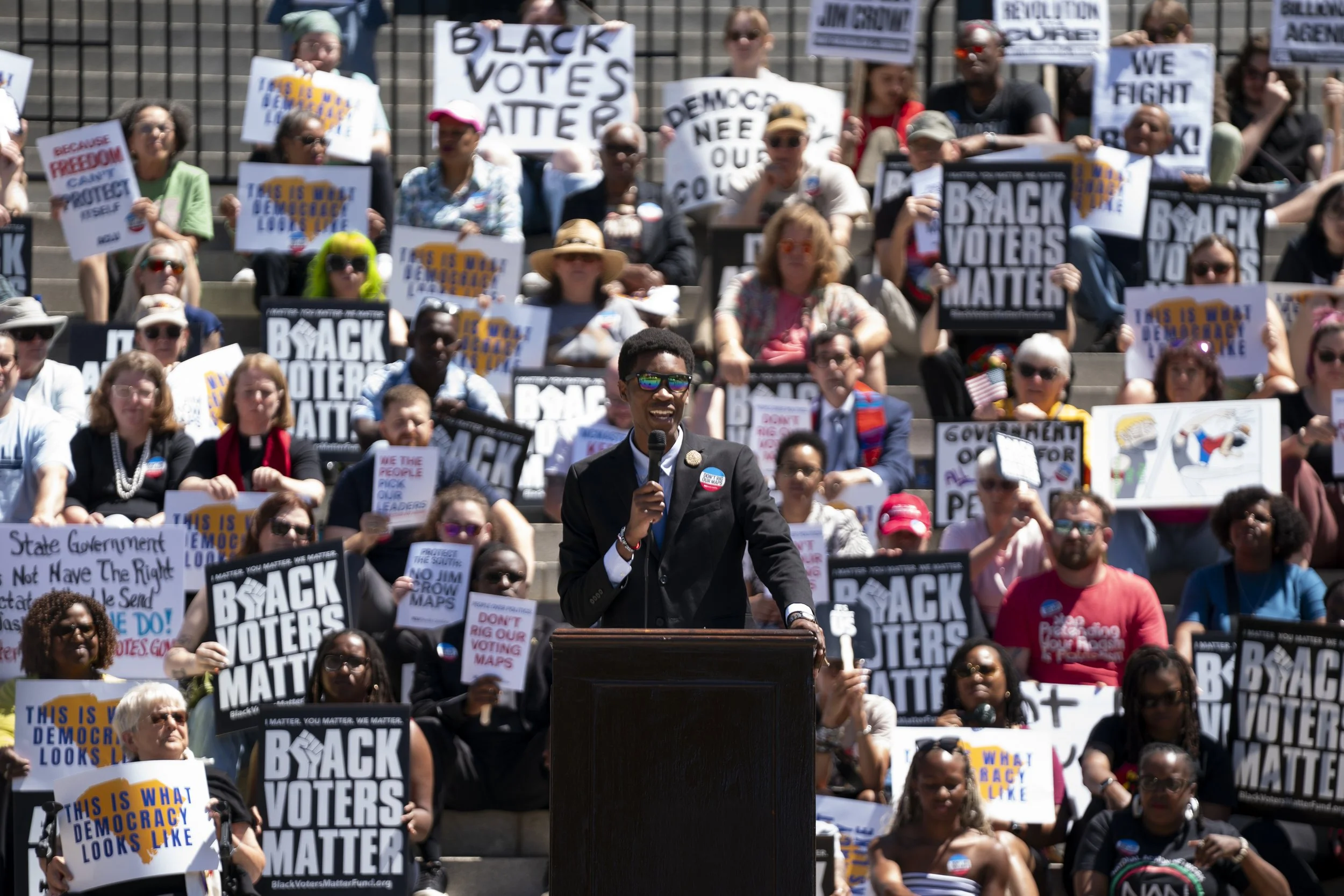
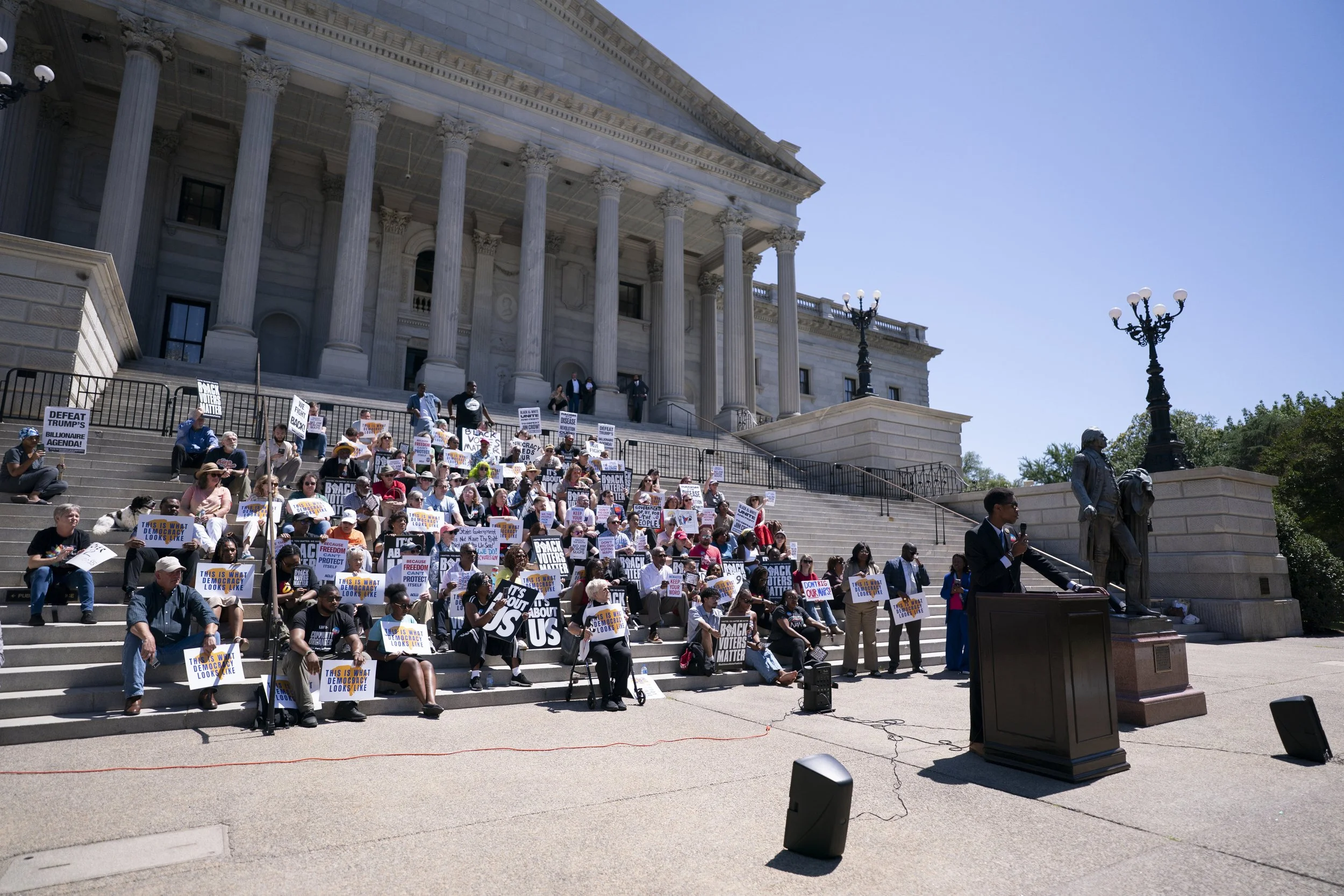
COLUMBIA, SOUTH CAROLINA - MAY 14: Demonstrators gather on the statehouse steps during a rally in opposition to congressional redistricting on May 14, 2026 in Columbia, South Carolina. Early voting for the midterm statewide primary starts on May 26. (Photos by Sean Rayford/Getty Images)
by Seanna Adcox and Skylar Laird (SC Daily Gazette)
COLUMBIA — With just 12 days before early voting polls open, legislators will begin a special session for the purpose of redrawing South Carolina’s congressional lines.
Gov. Henry McMaster called a special session beginning 11 a.m. Friday. He did not dictate what legislators should do, as the governor lacks that authority. But the prelude section of his executive order alludes to the purpose.
“Whereas, the General Assembly began debating South Carolina’s congressional districts … but that debate was not concluded when the General Assembly adjourned sine die,” the order reads, referring to state law’s mandated end to the regular session at 5 p.m. Thursday.
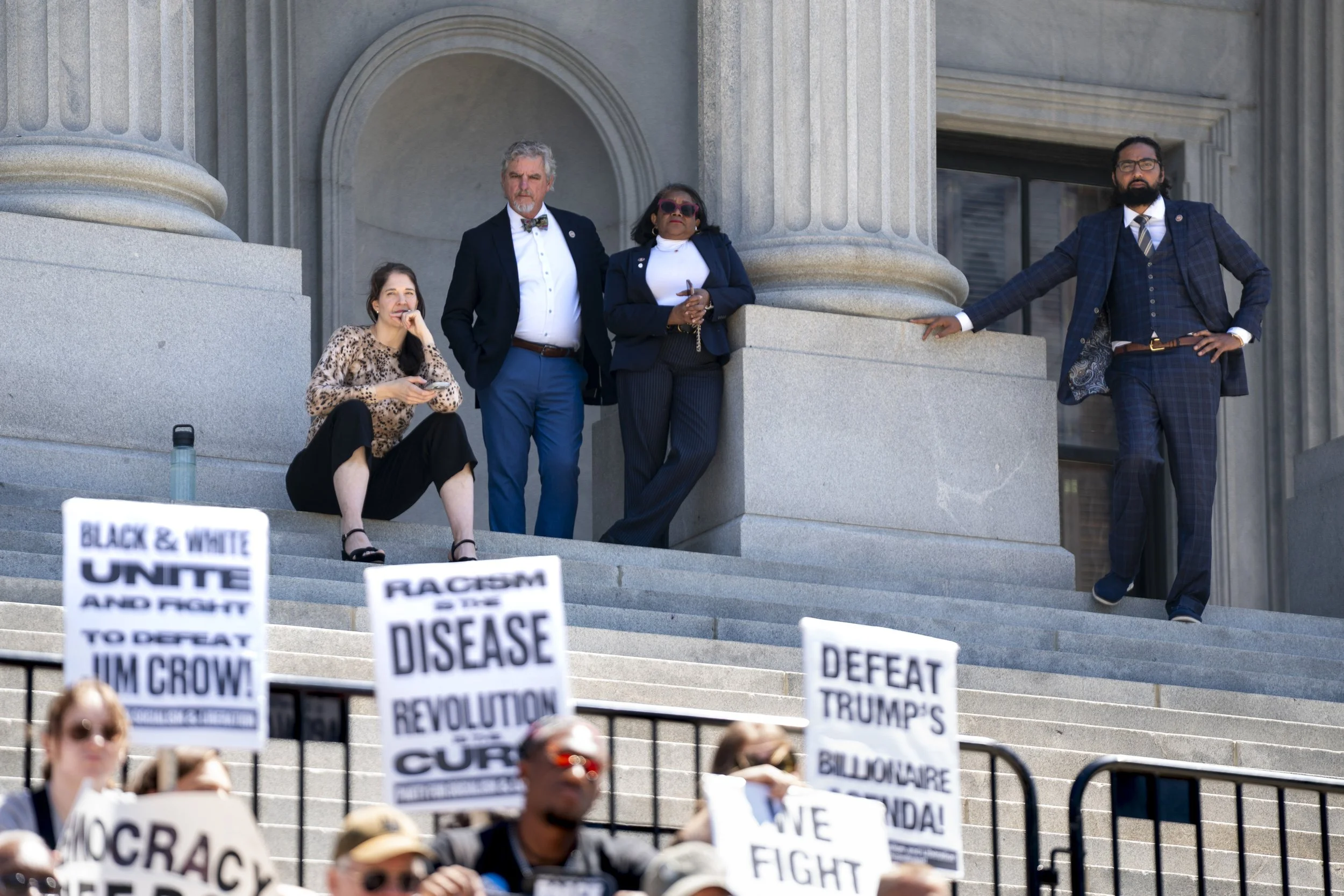
Lawmakers watch as demonstrators rally on the statehouse steps.
“An issue of such public importance and interest should be not only debated but also decided by the People’s representatives,” it continues.
He issued the order without a statement. He did not hold a news conference to take questions.
GOP leaders said McMaster informed them of his plans Wednesday.
The self-imposed deadline for passing a new map of congressional districts is May 26, House Majority Leader Davey Hiott told reporters Wednesday evening.
“We’re fully aware” that’s when early voting starts, said the Pickens County Republican. “We believe that’s the deadline.”

McMaster’s order comes under pressure from the White House, the state GOP and Republicans who want to replace him in the Governor’s Mansion — including the candidate he endorsed, Lt. Gov. Pamela Evette, who told a House Judiciary panel Tuesday to get it done “by any means necessary.”
It also comes two days after the Senate refused to add redistricting to a resolution setting the rules for what the Legislature can do after the regular session concludes.
The 29-17 vote fell two “ayes” short of the two-thirds majority approval needed, as five Republicans joined 12 Democrats in rejecting the White House push.
McMaster has previously said redistricting is a matter for the Legislature to decide and that he didn’t expect to call a special session.
But at some point this week, he did “a complete 180 on this issue,” Senate Majority Leader Shane Massey told reporters after the session adjourned Thursday.
“If you’re going to flip-flop on something like that, it would have been a whole lot better for everybody if you’d have just done it a few months ago,” Massey said. “I talked to the guy four or five times last week.”
Massey suggested McMaster’s switch was due to the White House.
“Based on what I’ve seen this week, I think the governor’s going to do whatever he’s told to do,” Massey said. “There doesn’t seem to be a whole lot of pushback or backbone downstairs this week.”
Massey was among the five GOP senators who voted “no” Tuesday.
The failure of that resolution also created a window for the governor’s order. No law in place for the off-session enabled McMaster to call the Legislature back.
Legislators sent to his desk a separate bill Wednesday limiting off-session work to the budget and negotiations on differing versions of bills that have passed both chambers. But he has until midnight Tuesday to sign it into law. It will govern future off-sessions.
Zoom in on the differences
For an interactive map of South Carolina’s existing congressional districts, click here. For the proposed map, click here.
A separate special session to finalize the budget and other compromises may not be scheduled until after the June 9 primaries, Hiott said.
‘Best scenario’ timeline
While McMaster’s order can’t limit the special session’s agenda, Hiott said the sole purpose will be redistricting.
The process will start in the House with legislation adopting the White House-endorsed map and delaying congressional primaries. The House Judiciary Committee’s party-line vote to advance the bill Tuesday followed the Senate’s rejection of the effort.
Legislators will have access to the House “map room” over the weekend to draft proposed changes in the lines.
Senators won’t do anything until the House sends them that bill.
The House GOP’s goal for doing so is this Tuesday. That’s the “best scenario,” following what’s expected to be a very long and likely confrontational debate, Hiott said.
That would give the Senate one week before early voting to pass a bill that would nullify part of voters’ ballots. While delaying U.S. House contests, the House bill keeps all other primaries — including statewide offices, state House seats and the U.S. Senate — on schedule for June 9, with runoffs June 23.
If the congressional primaries are pushed to August, the candidates who have been campaigning for months will still be on June 9 ballots. Any votes for congressional candidates simply wouldn’t count.
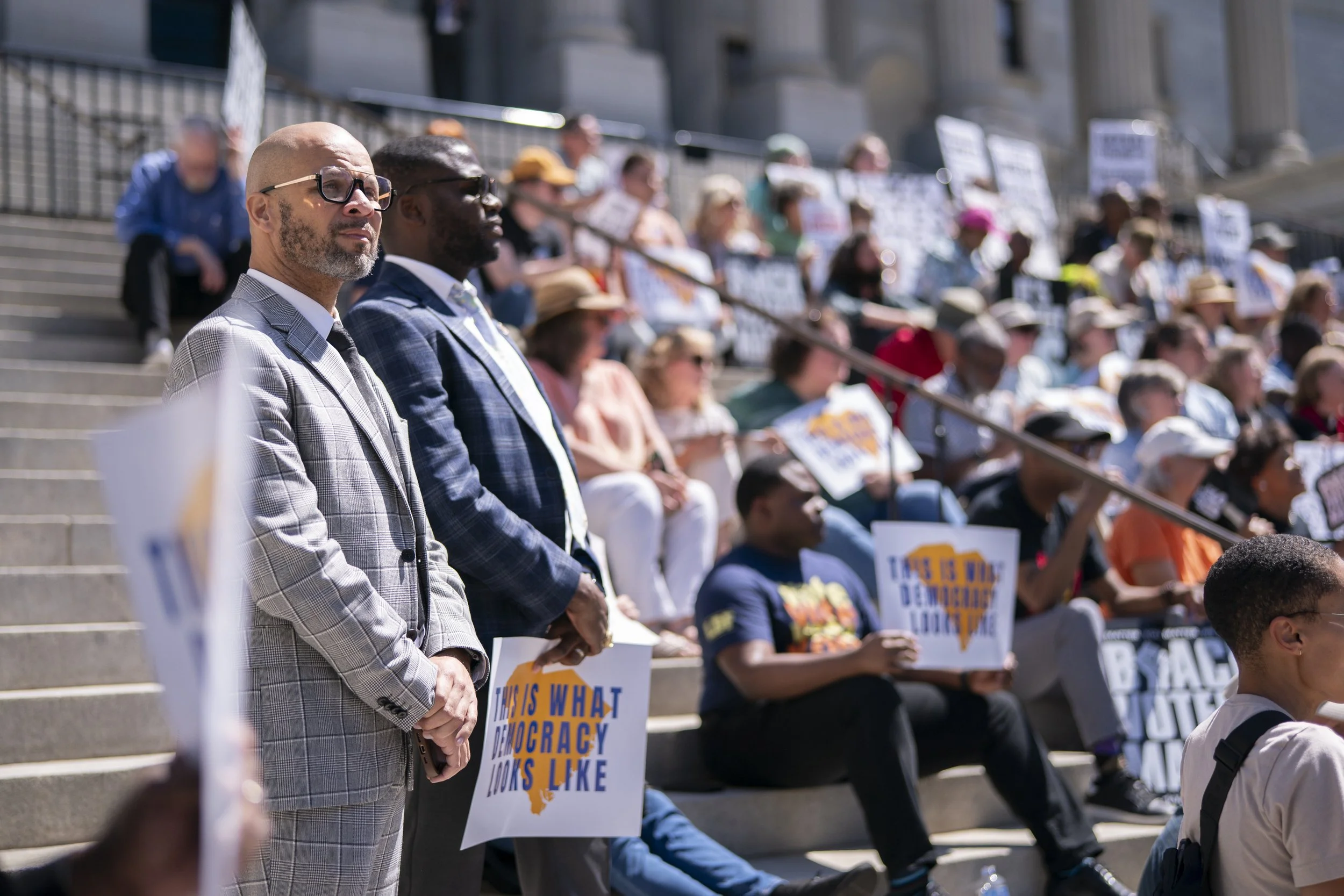
Rep John King (D-York) stands as demonstrators gather on the statehouse steps during a rally in opposition to congressional redistricting on May 14, 2026 in Columbia, South Carolina.
Outside the Statehouse on Thursday, more than 50 people protested the push to redistrict, holding signs reading, “this is what democracy looks like” and “Black voters matter.”
Half a dozen speakers said they worried about the cost to taxpayers of holding a second primary election and that they didn’t want legislators to bow to pressure from President Donald Trump.
Senators’ reasons earlier this week for rejecting the push included the confusion it would cause among voters, the thousands of absentee ballots already mailed, and the hundreds already returned.
“Those concerns are heightened every day we get closer,” Massey told reporters. There will be active military overseas who won’t be able to vote in a second set of primaries, whether because they’re on the move or just don’t know to ask for another ballot, he said.
Massey said he believed the deadline for overhauling the congressional map passed about three months ago — before candidates filed to run for districts that may look completely different.
“It’s all problematic, based on what’s right,” he said, noting he also expects legal challenges if the lines are changed. “I think we’re already too late in the game.”
Amanda Arthur, of Columbia, holds a sign protesting redistricting outside the Statehouse in Columbia, S.C., on Thursday, May 14, 2026. (Photo by Skylar Laird/SC Daily Gazette)

Why now?
The push from Trump is to pick up a Republican seat in November, in hopes of helping Republicans hold on to their already thin majority in the U.S. House.
The map created by the National Republican Redistricting Trust would draw U.S. Rep. Jim Clyburn, South Carolina’s lone Democrat in Congress, out of the seat he’s represented since the lines were gerrymandered in 1992 to create a Black-majority district. The court-drawn map enabled Clyburn to become the first Black South Carolinian in Congress in 95 years.
Due to population changes and required post-census redistricting since, the 6th District is no longer a majority-minority district, though it remains reliably blue.
The effort to redraw South Carolina’s lines to create seven Republican seats followed the U.S. Supreme Court’s ruling that threw out Louisiana’s congressional map as an unconstitutional racial gerrymander. While Republicans pushing for the overhaul say that’s why South Carolina needs to overhaul its map, Republicans who oppose the quick rewrite say the Louisiana ruling doesn’t apply to South Carolina.
As Massey has pointed out, the U.S. Supreme Court’s 2024 ruling that upheld South Carolina’s map rejected arguments that the lines were racially gerrymandered. They were upheld as partisan gerrymandered. The goal in packing Democrat-heavy precincts into the 6th District was to ensure the coastal 1st District stayed Republican, as Massey has acknowledged repeatedly.
Massey’s political concern about the proposed map is that it could ultimately result in two Democrats getting elected or at least igniting enthusiasm and an influx of money for Democrats, making it tougher for Republicans to hang on in races from Congress down to county councils.
This report was was published under Creative Commons license CC BY-NC-ND 4.0, originally published by the South Carolina Gazette
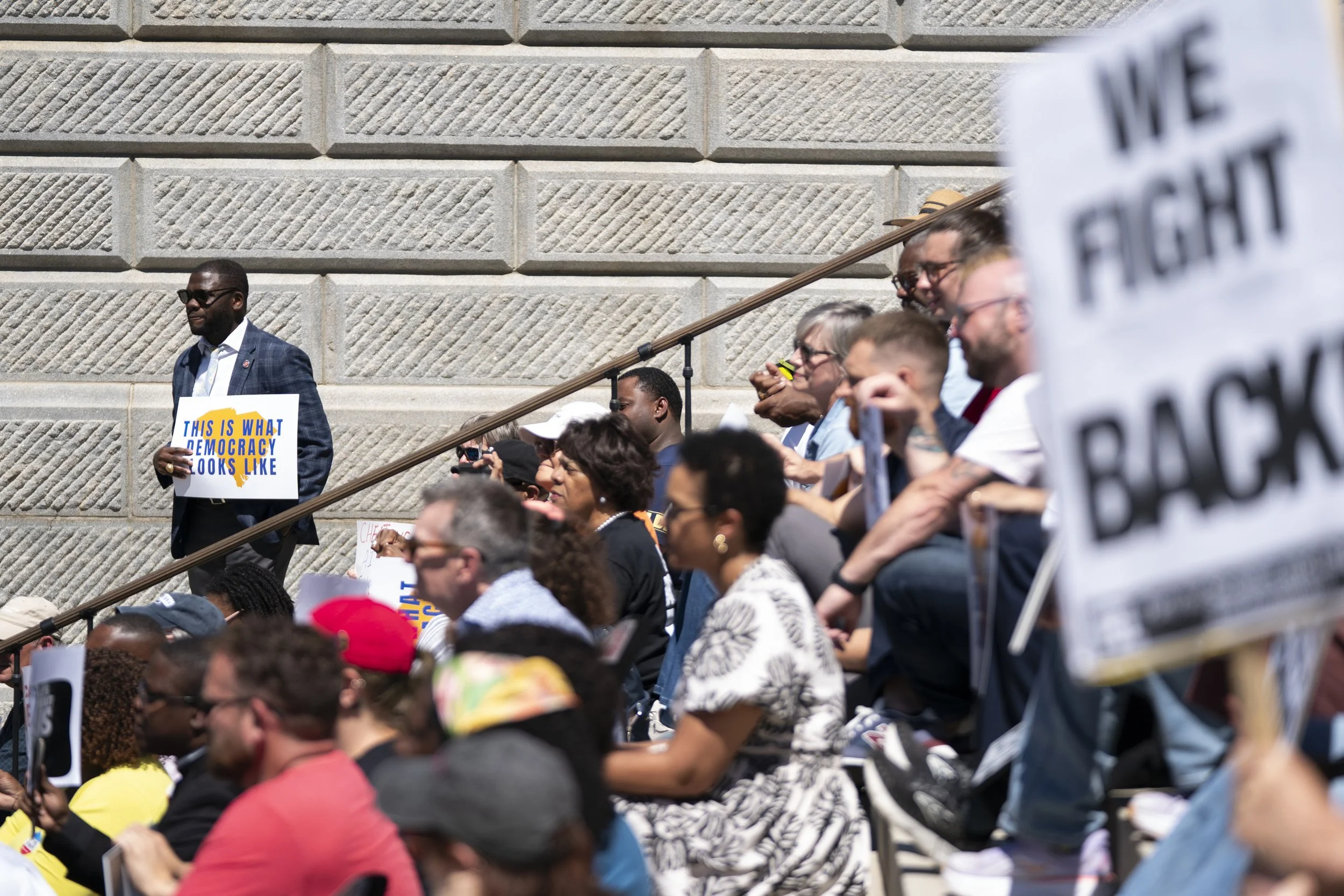
Rep. Kambrell Garvin (D-Richland) stands with demonstrators gathered on the statehouse steps during a rally in opposition to congressional redistricting on May 14, 2026 in Columbia, South Carolina. South Carolina Gov. Henry McMaster announced a special session on redistricting that could potentially dismantle Democratic held districts. Early voting for the midterm statewide primary starts on May 26. (Photo by Sean Rayford/Getty Images)